
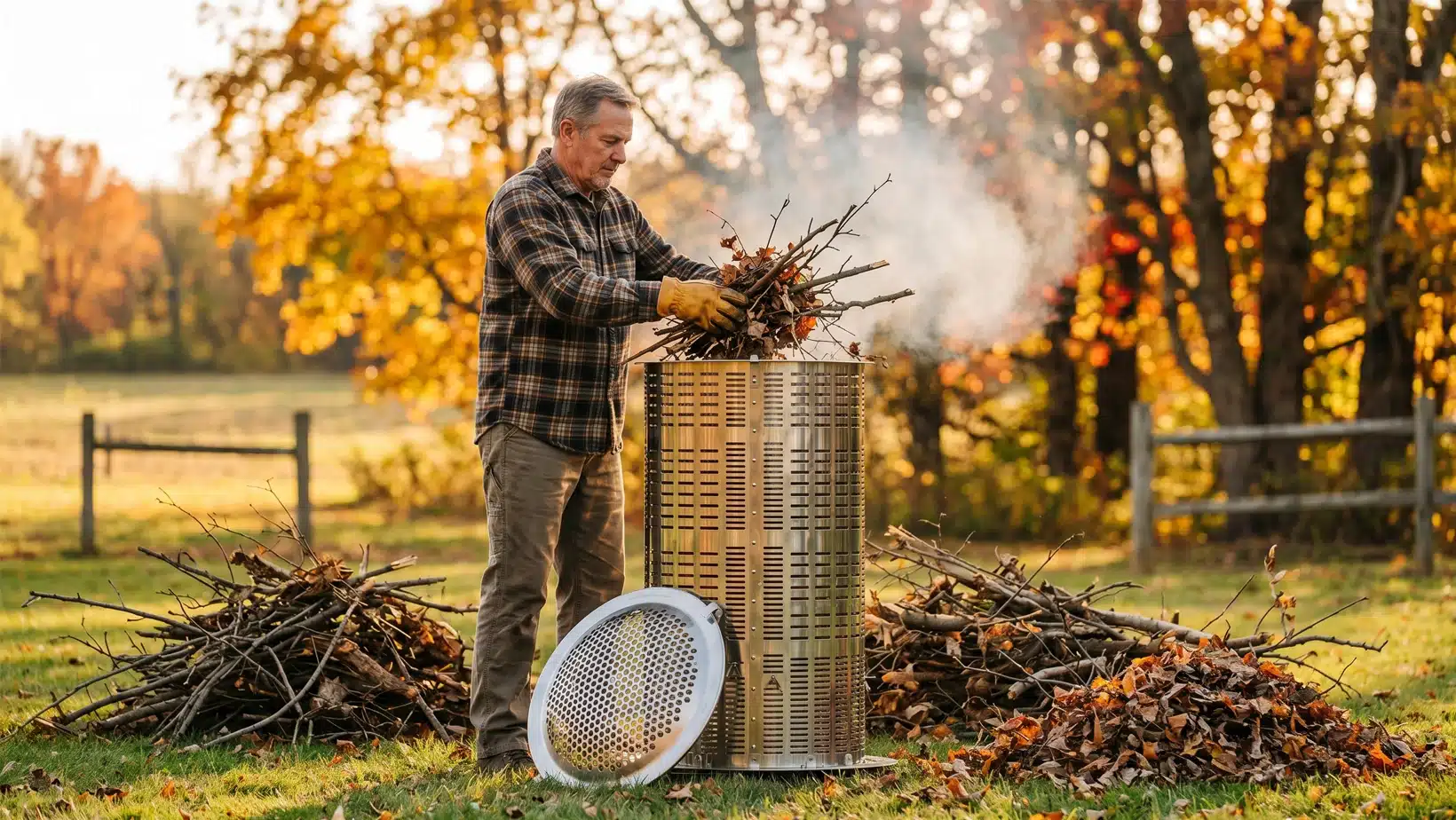
I hear it all the time in the landowner community. On forums, in emails, and even in a conversation I had today with a distributor, people use “burn barrel” and “incinerator” interchangeably.
On the surface, it makes sense: both are ways to get rid of yard debris and household waste, and conceptually, they aim to serve the same function.
However, once you look at how each one handles airflow, heat, and embers… the differences really start to matter:
- How much smoke you see
- How complete the burn is, and
- How often you replace equipment
Today, I want to ‘compare’ Burn Right® incinerators and burn barrels side by side and highlight the four areas where they perform very differently on your property.
What Is a Burn Barrel?
When most people think “burn barrel,” they think about a repurposed steel drum… usually a 55-gallon barrel that’s been turned into a tool to burn waste. 55-gallon drums weren’t built for burning in the first place. Most of these drums started life in industrial or commercial use and were given a second job out behind the shed.
A typical setup is pretty simple: a few holes punched or cut into the sides for some airflow, an open top, and maybe a makeshift grate or stand underneath. Users try to get creative.
The barrels are everywhere.
They’re inexpensive, easy to find locally, and require little effort to set up. In most cases, you load in yard debris or household trash, light it, and let natural draft pull air through the holes you’ve created to keep things burning.
What Is an Outdoor Incinerator?
An outdoor incinerator is a purpose-built burning unit that’s designed from the start for controlled combustion in a backyard or on a landowner’s property. Instead of being repurposed, it’s engineered specifically to handle repeated high-heat burns safely and efficiently.
These units use a fixed shape and vent pattern that move air through the burn chamber and rely on materials built to handle high heat. Material goes inside the chamber, embers stay contained, and ash collects where you can deal with it after things cool down.
Burn Barrels vs Burn Right® Incinerators: 4 Key Distinctions
Burn Right incinerators weren’t created to be another burn barrel. Our founder and mechanical engineer, Ron Wilfer, designed them to solve the common problems of traditional drums: poor airflow, heavy smoke, ash buildup, and limited durability. The result was a purpose-built stainless steel incinerator that offered landowners so much more.
1. Barrel Ventilation and Airflow
When you strip things down, airflow is one of the biggest reasons a burn barrel and an outdoor incinerator behave so differently once lit. It affects how hot the fire gets, how quickly material breaks down, and whether the fire burns or just smolders.
Airflow in a Basic Burn Barrel
In your traditional burn barrel, airflow comes through any holes punched or cut in the sides. This air is unstructured and inconsistent, with some parts of the fire getting oxygen while others are starved.
Without a steady supply of oxygen, the fire tends to burn at lower temperatures and slide into a smolder, especially once the first burst of flame dies down.
Smoldering burns at only a few hundred degrees, creating more visible smoke and leaving behind half‑burned material instead of reducing the load to ash.
Airflow in a Modern Incinerator
A purpose-built outdoor incinerator is set up very differently.
The shape of the unit and the pattern of vents are designed to pull fresh air in and around the material from all sides, feeding oxygen to the fire more evenly and consistently.

Inside the chamber of a Burn Right® incinerator, angle grates hold material slightly above the bottom of the unit. This allows air to circulate underneath the fire and encourages a strong bottom‑up burn.
The engineered airflow helps the fire reach and maintain much higher temperatures, often in the 1,800°F range in our well‑designed stainless steel units. Material actually burns through instead of lingering.
The result is less smoke, less leftover ash, and a burn that feels finished instead of stalled halfway.
2. Smoke and Air Quality
What goes into a barrel matters as much as the equipment itself. Burning dry yard debris and paper produces far less smoke and fewer byproducts than burning wet material, treated wood, or synthetic waste, regardless of what unit you’re using.
Smoke From a Low-Heat Fire
Because burn barrels operate at lower temperatures with inconsistent airflow, they tend to produce more smoke, and that smoke carries more with it than just visible haze.
Burn barrels receive little oxygen, which creates low-temperature fires that produce particulates, carbon monoxide, and other pollutants due to incomplete combustion. Burn barrel fires generally do not exceed temperatures of 500°F. However, complete combustion requires much higher temperatures to break down materials.
That lower-temperature smoke tends to stay close to the ground rather than dispersing quickly, which means it lingers near the property, the people working on it, and neighbors nearby.
Smoke From a Higher-Heat Burn
A hotter, more complete burn simply produces less smoke. When material breaks down more completely at higher temperatures, less unburned organic matter escapes into the air.
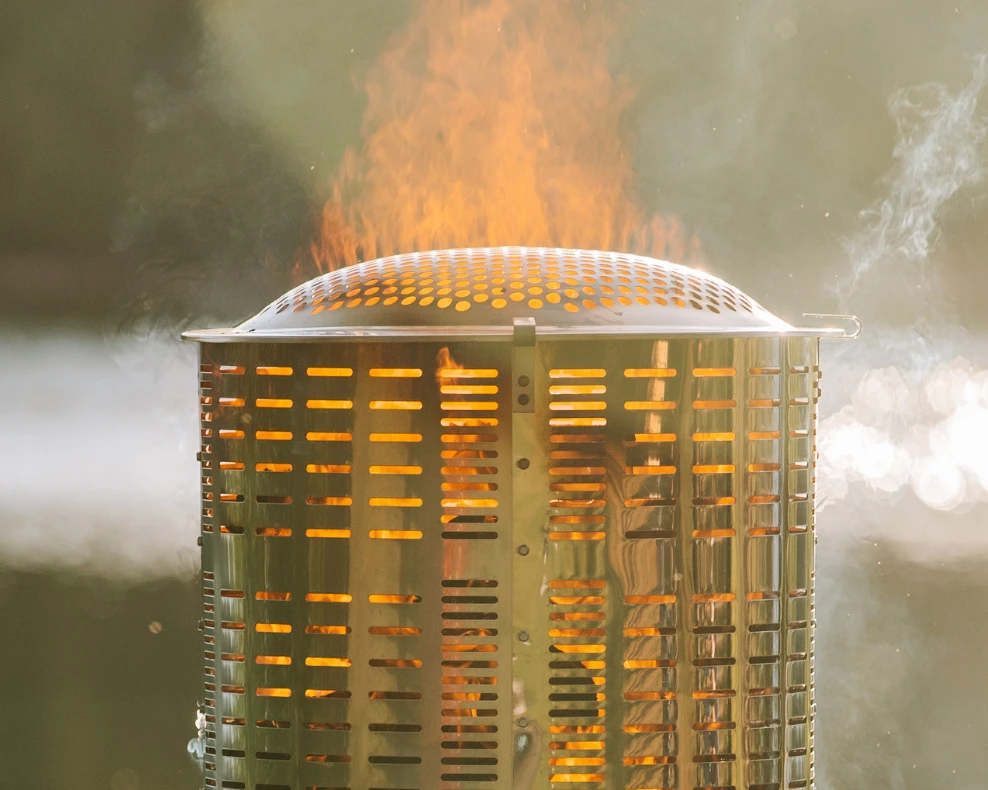
Following best practices and burning approved materials can significantly reduce the impact on nearby people, property, and equipment. Using equipment that burns hotter and more completely is crucial for achieving this goal.
For the people on your property and your neighbors downwind, that’s a meaningful difference on a burn day.
3. Durability
The durability of a burning unit depends on its materials and design. A repurposed steel drum and a purpose-built stainless steel incinerator start from very different places, and that gap becomes obvious after a few seasons of regular use.
A Basic Burn Barrel Wasn’t Built for This
Standard steel drums were never designed for repeated high-heat exposure.
Every burn cycle puts stress on the metal, and when you add moisture, ash buildup, and the constant expansion and contraction from heating and cooling, deterioration sets in quickly.
The bottom typically goes first, rusting through from the inside out. Most people who burn regularly find themselves replacing a standard drum every one to two years, sometimes sooner.
As we can see, Jason does not approve of traditional steel barrels…

What to Expect From a Purpose-Built Incinerator
A quality outdoor incinerator is built as long-term equipment, not something you plan to replace every couple of seasons.
Design and materials both matter here: a cylindrical stainless steel unit holds up under repeated high-heat use in a way that standard steel drums and square or rectangular units simply do not, which is why warping and rust become real considerations when you compare options side by side.
Burn Right® stainless steel incinerators are one example of what that looks like over time. Our customers frequently report years of dependable use without warping, rust, or structural issues.
One Wisconsin customer who has been burning with his unit for more than 15 years says that when he divides the upfront cost by the years of use, it “shows me I made the right choice,” and he doubts he will ever wear it out.
Another customer, after nearly 20 years, sums it up even more simply: they have “never had a minute’s trouble” with their incinerator.
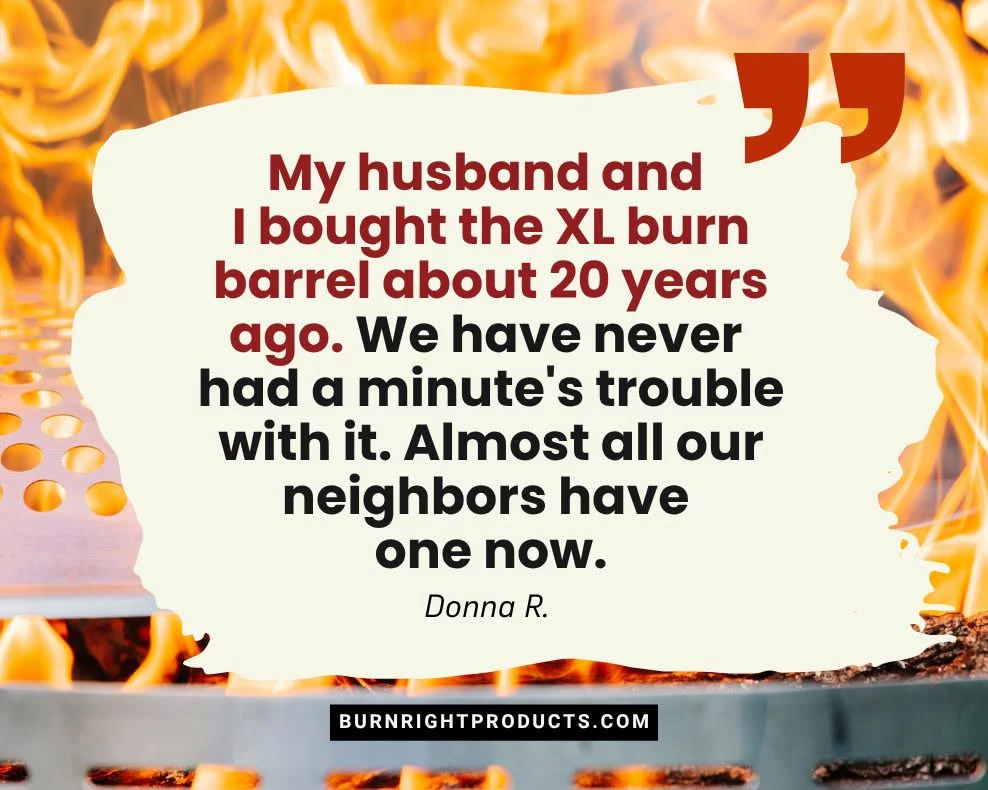
Another customer compared years of burning in “crappy barrels including 50‑gallon drums” to a large Burn Right® barrel that now handles the same workload in about an hour and, after 5–6 years of use, “hasn’t warped, fallen apart, nothing.”
For anyone burning regularly on their property, that kind of lifespan and performance turns an incinerator into a long‑term part of the property, not something you are constantly replacing.
4. Ash Cleanup
How easy it is to deal with ash after a burn might not seem like a significant detail at first, but it shows up every time you use the unit. If you burn regularly, the difference between wrestling with a half‑rusted drum and tipping a purpose‑built incinerator adds up fast.
Ash Cleanup in a Basic Burn Barrel
In a basic burn barrel, everything ends up in the same place. Ash and half‑burned debris collect at the bottom and pack down over time, with no dedicated path to fall away.
Cleaning usually means tipping the whole drum on its side or digging ash out from the top. Both options get harder as the barrel rusts, warps, or softens at the bottom from repeated use. If you are frequently burning, the cleanup routine becomes a regular chore rather than an occasional task.
Ash Cleanup with an Outdoor Incinerator
Purpose‑built outdoor incinerators are designed with cleanup in mind from the start.
On Burn Right® stainless steel units, the base ring is positioned outside the burn chamber, allowing ashes to fall directly onto the ground or into an ash catcher instead of accumulating inside the unit.
Once everything has cooled, you simply tip the body, roll or move it away from the ash pile, and then shovel or dump the ash where it needs to go.

For landowners who manage regular burns, that kind of straightforward cleanup makes it easier to stay ahead of ash buildup and keep airflow open for the next fire, instead of fighting with a clogged or deteriorating barrel every time you burn.
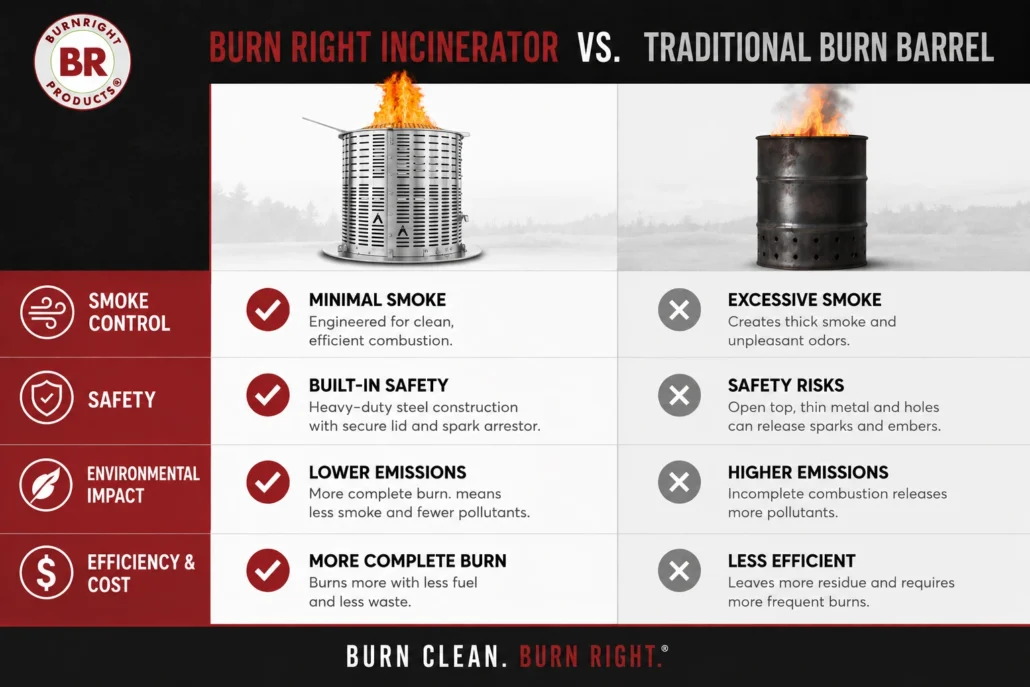
Burn Right® Incinerators Vs Burn Barrels: A Quick Side-by-Side Look
Burn Right® Incinerators: Built for Property Owners
If you burn regularly, it’s best to use a tool designed for this exact purpose rather than any drum you have on hand. A purpose‑built stainless steel outdoor incinerator is something you can rely on season after season, not a stopgap you expect to replace.
Burn Right stainless steel incinerators combine patented airflow technology with 100% stainless steel construction and a cylindrical shape designed for durability in real-world use.
Contact Burn Right® Products today to find the right incinerator for your needs.


