

Ask anyone with a few acres what they do with their yard waste, and burning comes up fast. It’s the default for a reason: it’s simple, and it’s been the go-to for generations. Grandpa did it. The neighbors do it. Why wouldn’t you?
But burning affects more than your own property line. Smoke drifts. Ash settles. What burns cleanly in one yard can cause real problems two properties over, which is why state and federal agencies publish guidelines on backyard and open-pit burning.
Before you strike a match, it’s worth knowing what those guidelines recommend and where a smarter setup like a Burn Right incinerator fits in.
Ways to Reduce Backyard Burning
Burning isn’t always the only option. Before lighting anything on fire, take a hard look at what you’re burning and ask whether a non-burning option makes more sense.
For Household Waste
- Reduce what you generate. Buy in bulk, choose products with less packaging, and pick items built to last instead of single-use versions.
- Recycle. Your local reecycling program accepts paper, cardboard, aluminum, metal, and many plastics. Check with your municipality to confirm what they accept in your area.
- Use trash collection or a landfill. Many communities offer curbside pickup, large-item pickup, or dumpster rental should you need to dispose of or haul off large amounts of refuse.
- Donate, sell, or repurpose. A rummage sale, an online listing, or a local donation center can keep usable items out of the burn pile altogether.
For Yard and Vegetative Waste
Brush, leaves, grass clippings, and stumps make up most of what rural and acreage properties burn, and a few options tend to work better than burning:
- Leave it in place. Grass clippings and leaf debris left on the lawn return nutrients to the soil.
- Chip it. A professional wood-waste chipper can turn large amounts of brush and clean wood into mulch, boiler fuel, animal bedding, or erosion-control material, whether you drop it off or have it picked up.
- Compost it. Home composting works well for smaller volumes, and some municipalities offer collection or drop-off composting for yard waste.
- Turn it into wildlife habitat. A managed brush pile can double as shelter for local wildlife.
- Check municipal options. Many local governments collect or accept vegetative waste for drop-off and manage it through composting, chipping, or landspreading, all preferable to burning it at home.
When Burning Is Still Necessary
Sometimes, burning is the only real option. That’s why state and federal agencies often recommend burn barrels as a fallback option.
We’ve researched this topic extensively with national organizations and agencies, all working toward the same goal: safer burning that’s lighter on the environment.
Why Homemade Incinerators and Burn Barrels Fall Short
Homemade incinerators sound simple enough. In practice, most don’t hold up. Our research found that the average homemade incinerator doesn’t meet government safety recommendations, either because it’s too difficult to build to spec or because homeowners skip steps along the way.
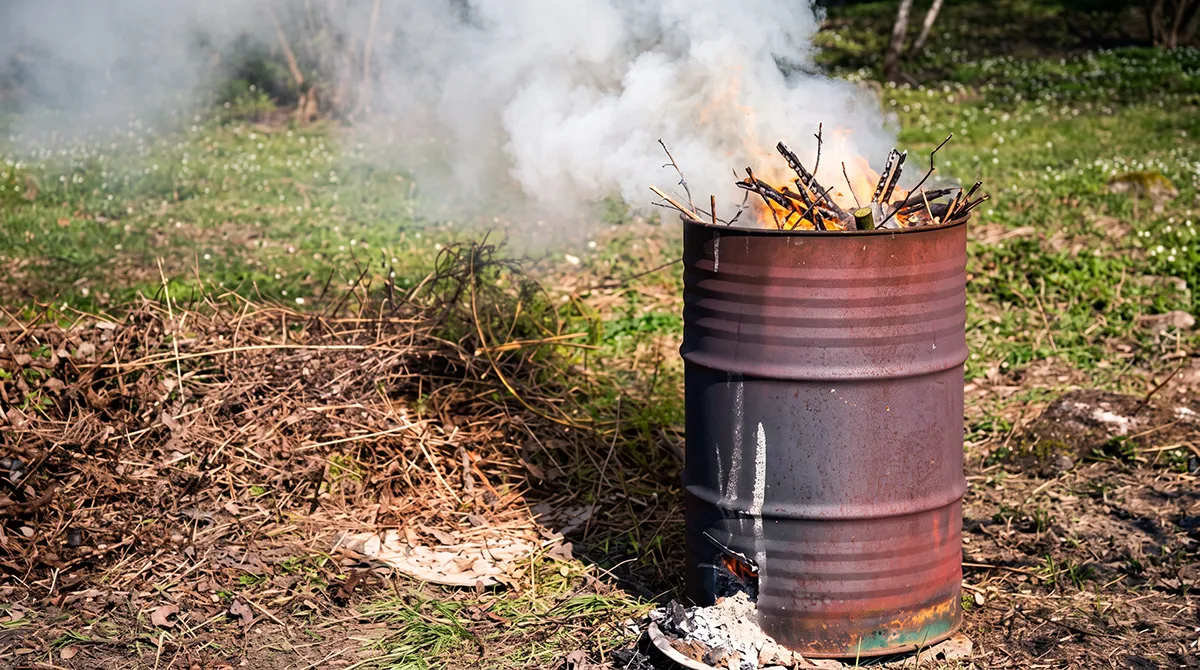
Modifying a burn barrel helps a little, but it isn’t enough on its own. No matter how you adjust it, a standard 50-gallon drum isn’t designed for burning. The fire starves for oxygen, which leads to smoldering and heavy smoke. Burn barrels also release a significant amount of dioxins into the atmosphere, affecting the health of the entire community.
Burn Right Products LLC has removed the guesswork by building a solution that satisfies both homeowners and government agencies.
How Burn Right Incinerators Exceed Safety Guidelines
Here’s exactly what goes into a Burn Right incinerator, and why it holds up where a homemade setup doesn’t:
Built on Patented Technology Since 1999
Our team began developing this airflow design in 1999, and we currently protect two U.S. patents: #6,932,001 and #7,438,003. Both describe the same fundamental concept: a chamber with internal flanges and lips that draw air through the burn instead of letting it accumulate at the bottom.
This is why our units produce less smoke than a standard burn barrel, and why every model still performs as it did on day one.
Patented Airflow for a Hotter, Cleaner Burn
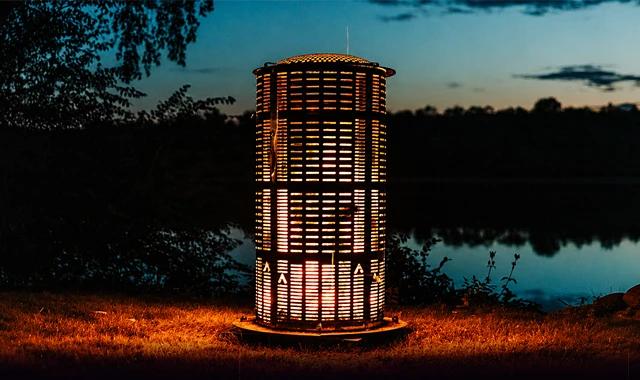
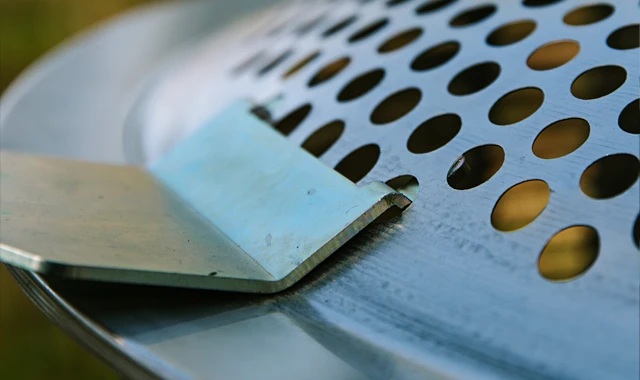
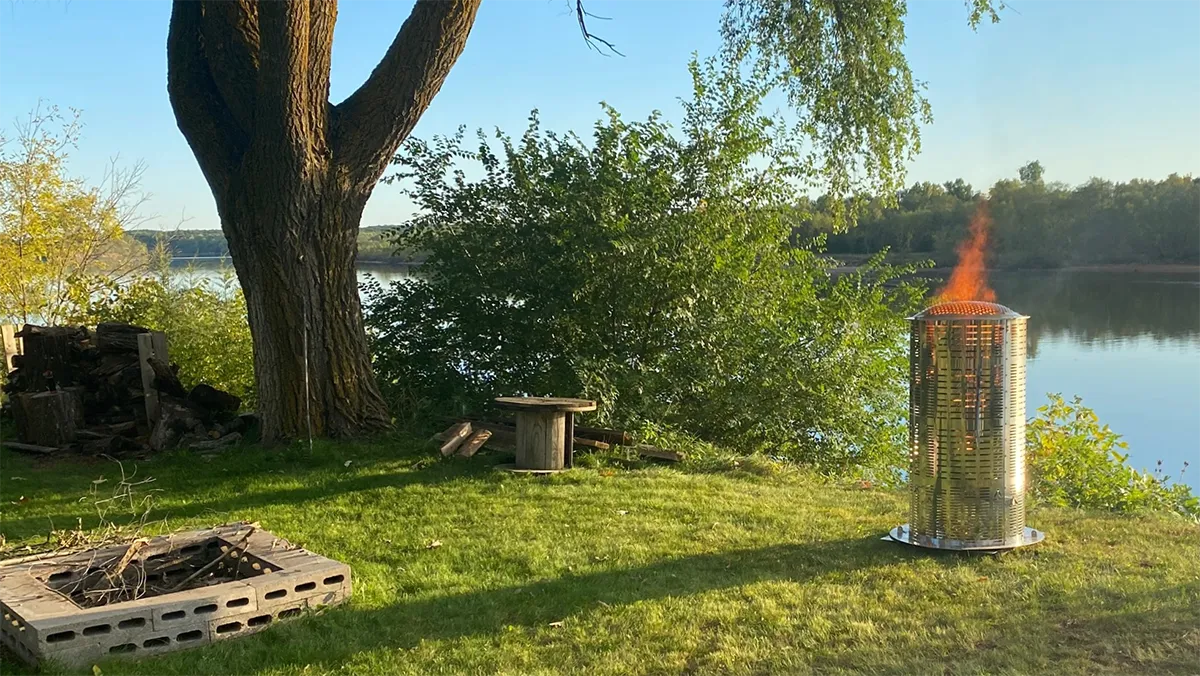
Inside the chamber, angled grates suspend burnables above the unit’s bottom. Four internal flanges, spaced evenly around the interior, direct air past the material as it burns.
Together, they keep oxygen moving through the pile instead of pooling at the bottom. The fire works from the bottom up and burns through the entire pile instead of smoldering on top.
Engineered for Extreme Heat
We build for the heat our units actually reach. Stainless steel shows light surface oxidation around 1000°F, but that’s cosmetic, not structural. It won’t burn out until temperatures hit 2550°F.
Our incinerators run in the 1600°F to 1800°F range, so every model uses 430-grade stainless steel panels paired with a 304-grade cover built to hold up at that heat without warping.
This is also why we stick with a round design instead of a square one. Flat panels are far more likely to bend under sustained high heat. A cylindrical body keeps its shape burn after burn.
Ash Falls Away for Faster Cleanup
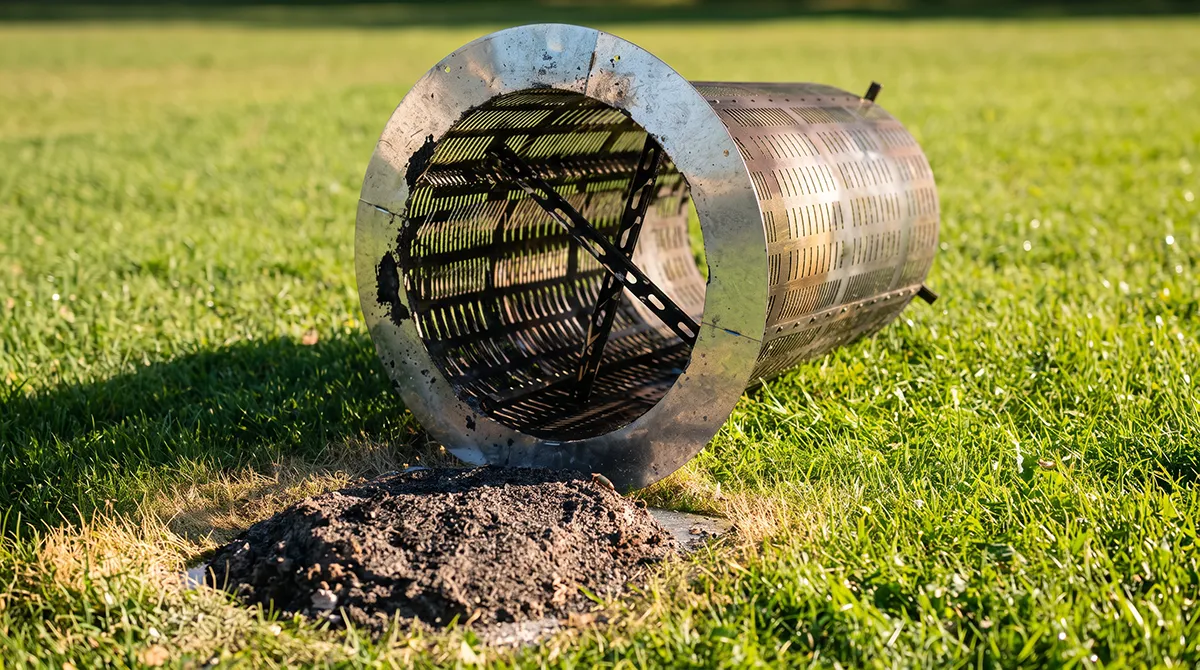
With our models, ashes fall straight to the ground because the base ring sits outside the burning chamber. Once incineration is complete and the ashes have cooled, simply tip the incinerator body and move away from the ash pile.
Safety Precautions Included With Every Unit
Every incinerator ships with a full safety and assembly guide covering clearance requirements, ash handling, and wind conditions. You’re never left guessing how to run it safely.
Ready for a Better Way to Burn?
Burning isn’t going away, and for many rural and acreage properties, it’s still the most practical way to manage yard debris. When burning is the best option, how you burn matters just as much as what you burn.
A Burn Right incinerator is built for that moment. Patented airflow, real stainless steel, and a design built to last mean a hotter, more complete burn with less smoke and less ash, season after season.
Contact us today to learn more about switching to safer, cleaner backyard burning.